The instruments
The flamenco guitar and the cajón
What sets a flamenco guitar apart from a classical model, what the golpeador is, and how the Peruvian cajón became a flamenco instrument.
Book the palace flamenco show ↗Quick answer
A flamenco guitar has a lower action, thinner top and smaller body than a classical guitar, which gives a brighter, more percussive tone. Many have a tap plate, the golpeador, for rhythmic finger taps. The cajón, a box-shaped drum from coastal Peru, entered flamenco after Paco de Lucía brought one to Spain following a 1977 visit to Lima.
A guitar built for accompaniment
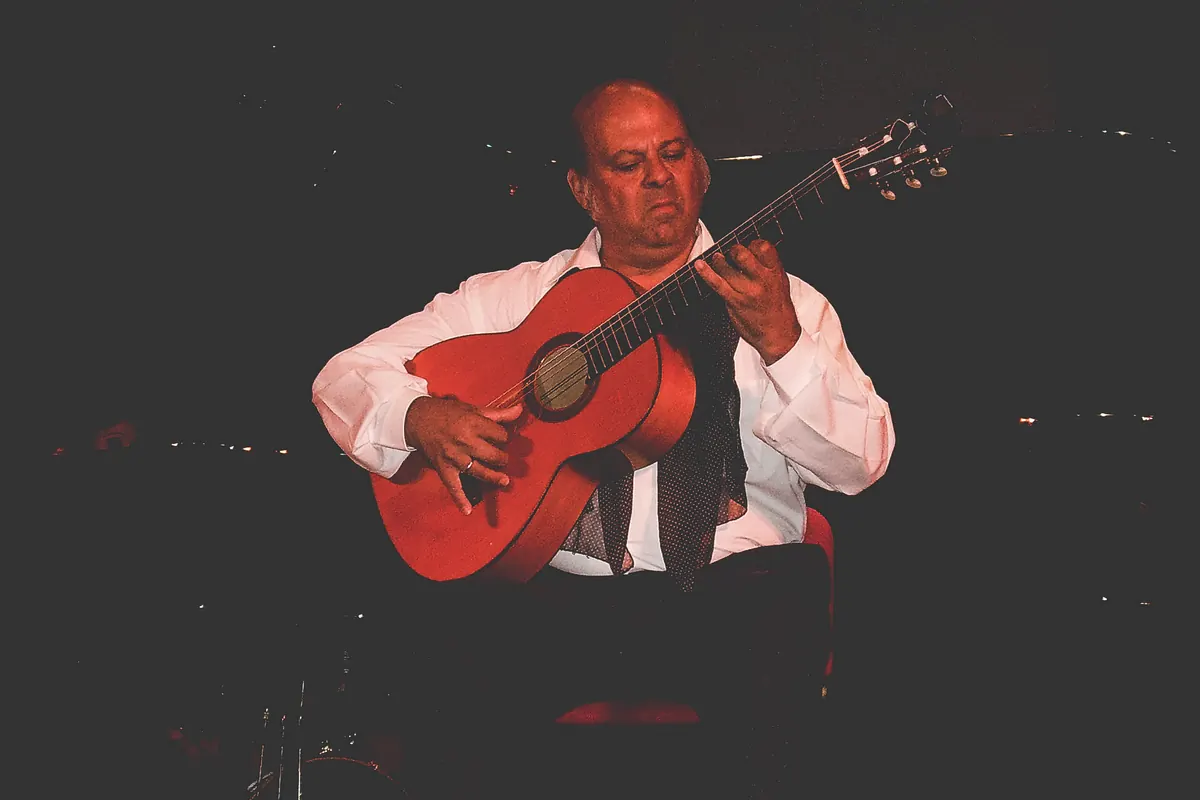
According to Wikipedia, flamenco guitars are lighter in build than classical models, with strings set low, a thinner top, a smaller body and less bracing inside, and that this gives a brighter, more percussive tone. The lower action eases fast playing, and string buzz is tolerated and sometimes used expressively. Flamenco guitars respond more quickly and sustain less, which keeps fast passages clear. Traditional backs and sides use Spanish cypress, sycamore maple or rosewood, with spruce tops.
The golpeador and the capo
Many flamenco guitars have a plastic tap plate, the golpeador, which protects the body from the rhythmic finger taps, called golpes. Classical guitars typically lack one. The capo, called a cejilla, is used mainly to match the key to the singer's range rather than only to brighten the sound. So when you see a capo at a show, it is usually there for the voice. Little traditional guitar music is written down, and most of it is passed on by ear.
Techniques you can hear
Wikipedia lists the rasgueado, a strum made by flicking three to five fingers of the right hand outwards, and the picado, scale passages played by alternating index and middle fingers. It lists the alzapúa, a right-hand thumb technique with roots in oud plectrum playing, and the apoyando, striking toward the soundboard so the finger rests on the next string, which gives the tone its harsher quality. You do not need the names to hear the difference between a strummed burst and a fast single-note run.
The cajón's road to flamenco
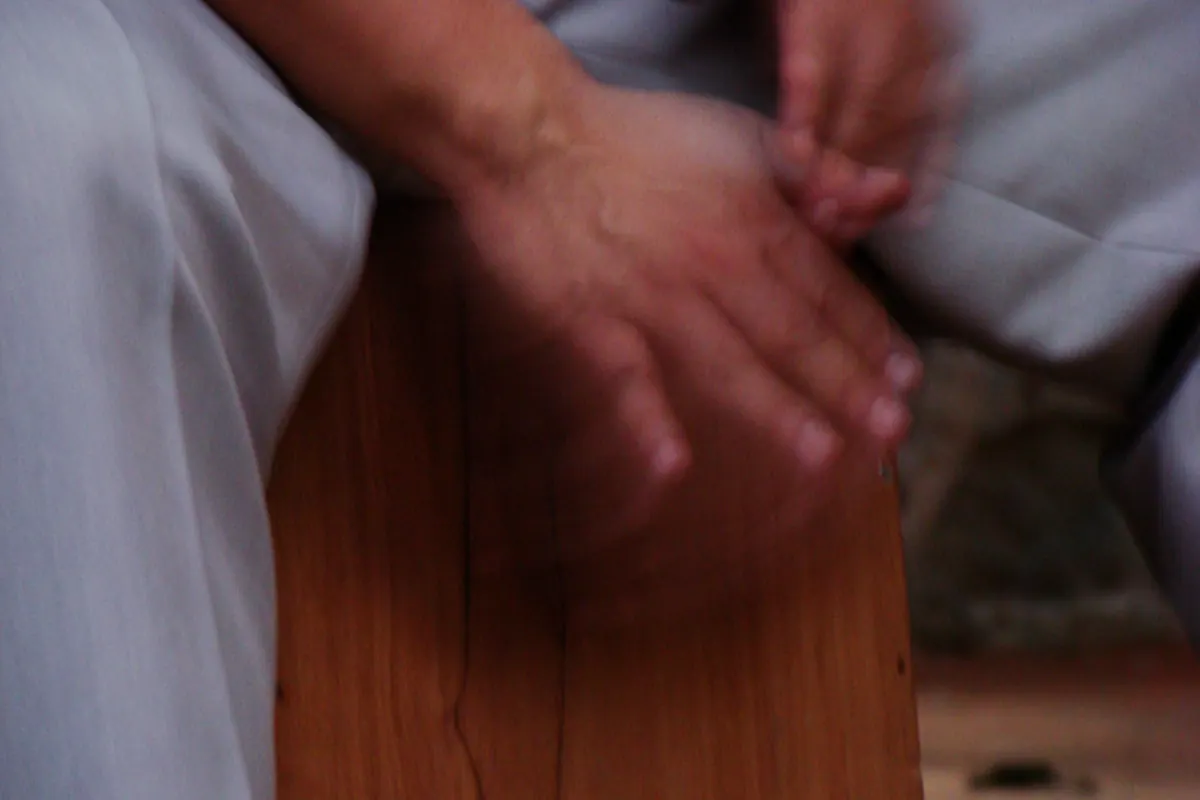
Wikipedia says the cajón developed in coastal Peru during slavery, from West and Central African boxlike instruments, and that Peru declared it National Heritage in 2001. After a 1977 visit to Lima with the Peruvian percussionist Caitro Soto, Paco de Lucía brought a cajón to Spain for his music. The article says percussion historians credit Pepe Ébano with introducing it into flamenco, and that it was later used in the recording Entre dos aguas.
How it is played
The player sits on the box, tilted at an angle, and strikes the front face between the knees. The front is usually thin plywood. Wikipedia says players strike it with hands and fingers, or sometimes with brushes, mallets or sticks, and can slap the sides with palms and fingers. Some use drumming gloves, and some attach a bass drum pedal. In a flamenco group it can hold the compás that palmas would otherwise carry. Whether a given show has a cajón varies, and the ticket promises dancers, singers and guitarists.
Frequently asked questions
What makes a flamenco guitar different?
It has a lower action, thinner top, smaller body and less internal bracing, which gives a brighter, more percussive tone, according to Wikipedia.
What is a golpeador?
A plastic tap plate on the guitar's face that protects the wood from rhythmic finger taps called golpes.
Where does the cajón come from?
From coastal Peru, where it developed during slavery from West and Central African boxlike instruments.
Will there be a cajón at the show?
It varies. The ticket promises dancers, singers and guitarists, so treat a cajón as a possible extra.
Sources